Free Jewish homeschool lesson guides for K–6 families.
Holiday lesson plans, Hebrew teaching tips, and parent how-tos for kindergarten through 6th grade. Free to read, free to use. Pair them with a complete lesson pack when you want everything ready to teach.
A cozy hut with a roof of branches, four plants you get to shake in every direction, and a whole week of meals under the stars. The sukkah, the four species (lulav, etrog, hadas, aravah), both blessings in Hebrew + transliteration, and a vocabulary table — the happiest holiday of the year, made easy to teach.
Eight nights, one more candle each time, until the whole chanukiah is glowing in the window. Chanukah is the festival of light growing in the dark — and one of the easiest, most joyful holidays to teach. Written for the homeschool parent who didn't grow up doing this: every Hebrew word transliterated, every step concrete, no prior Hebrew needed.
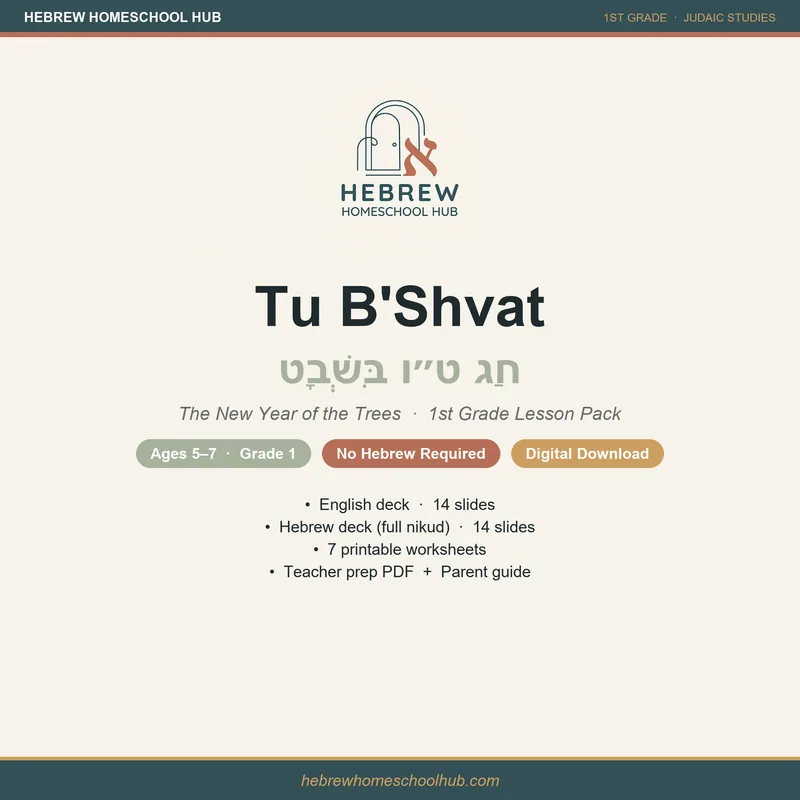
It's the trees' birthday. On Tu B'Shvat we taste the fruits of the Land of Israel, plant something, and say thank you for everything that grows. A gentle, sensory, easy-to-love holiday for young children — written for the parent who didn't grow up doing this, with every Hebrew word transliterated and no prior Hebrew needed.
Costumes, noisemakers, triangular cookies, and the story of a brave hidden queen who saved her people. Purim is the most playful day of the Jewish year — and it carries a beautiful, gentle message about courage. Written for the homeschool parent who didn't grow up doing this, with every Hebrew word transliterated and no prior Hebrew needed.
A table set for a story, four questions asked by the youngest child, flat crackers called matzah, and a hidden piece of afikoman to find. Pesach is the great Jewish story of freedom — and the Seder is practically built for kids. Written for the homeschool parent who didn't grow up doing this, with every Hebrew word transliterated and no prior Hebrew needed.
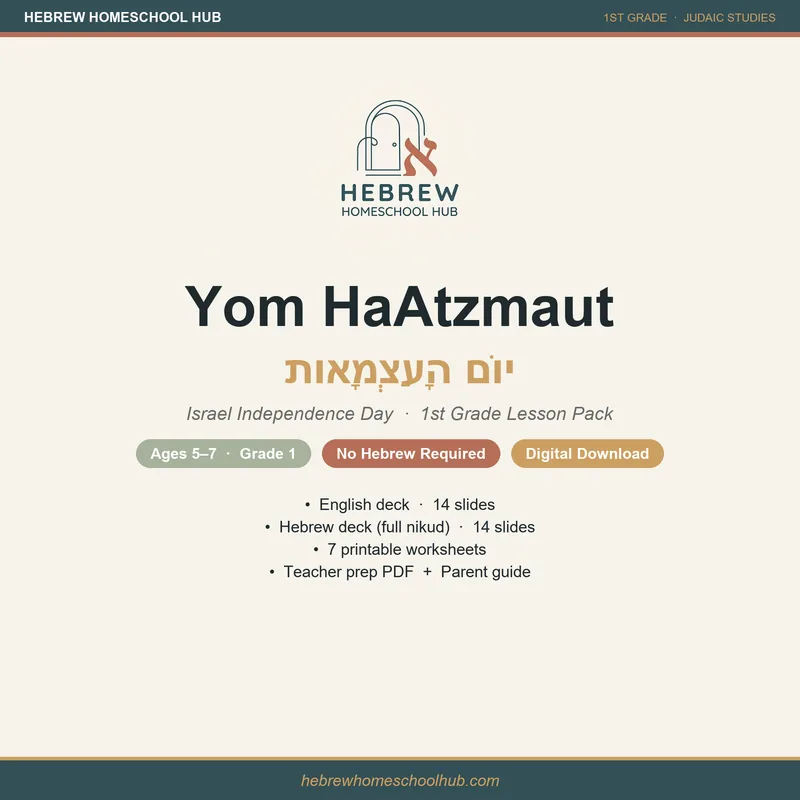
A blue-and-white flag, a song called "The Hope," and the story of a people coming home after a very long time away. Yom HaAtzmaut is Israel's birthday — and it's taught here with a gentle home-and-hope lens, never about war. Written for the homeschool parent who didn't grow up doing this, with every Hebrew word transliterated and no prior Hebrew needed.
Cheesecake, flowers all over the house, and the day the Jewish people received the Torah at Mount Sinai. Shavuot is a gentle, joyful holiday of customs a young child can taste and touch. Written for the homeschool parent who didn't grow up doing this, with every Hebrew word transliterated and no prior Hebrew needed.
The fasting question (kids don't fast — here's how to talk about it), Kol Nidre, Avinu Malkeinu, the closing of the gates at Neilah, and the final shofar blast at sunset. With the K–6 framing that protects a 5-year-old from "Day of Judgment" weight while preserving the seriousness of the day.
The shofar, apples and honey, the round challah, Tashlich by the water, and the gentle big idea behind the day — it's the world's birthday and a fresh start for everybody. Includes both blessings in Hebrew + transliteration + meaning, plus a Hebrew vocabulary table.
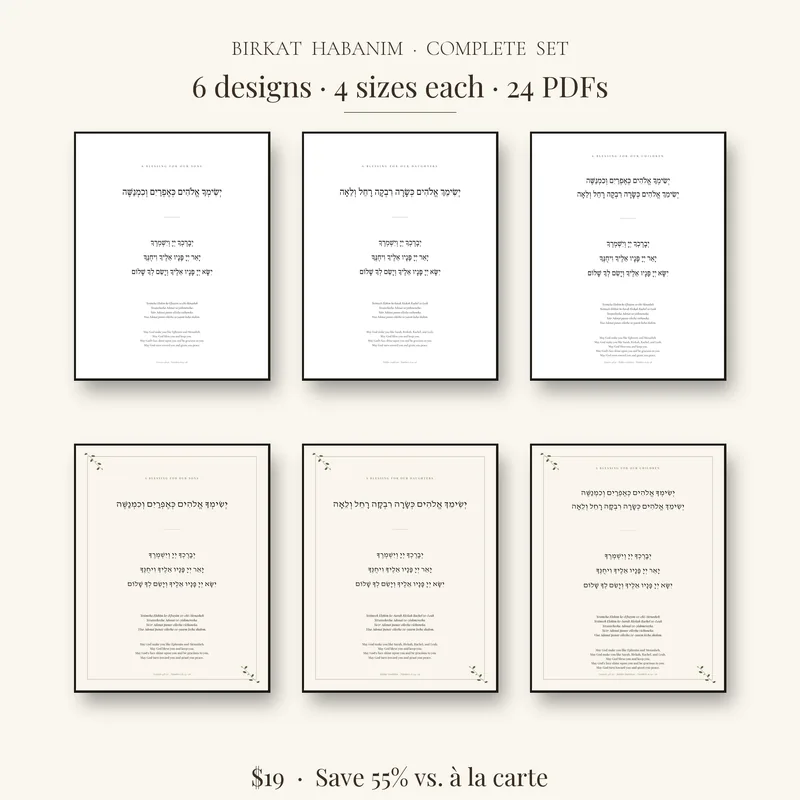
The warmest moment of the Shabbat evening — what to say, when to say it, what to do if you don't read Hebrew. The full Hebrew text for sons, daughters, and mixed families, plus the Priestly Blessing and a vocabulary table.
The longest, slowest, most beautiful countdown in the Jewish year. A free K–6 parent guide — how the count works, the bracha, four kid-friendly ways to make it visible, and the Hebrew vocabulary that lasts.
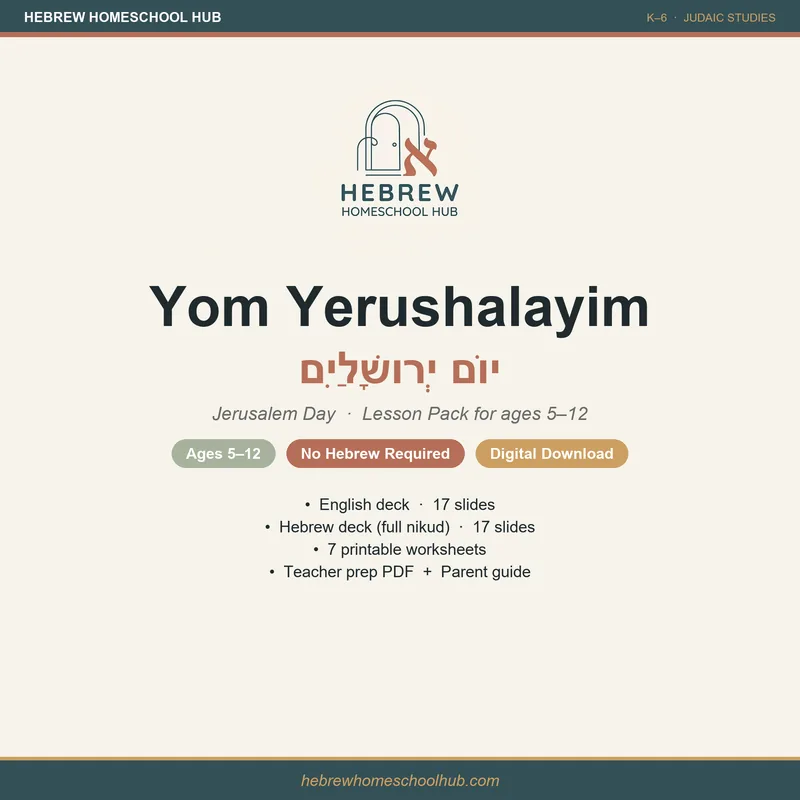
Jerusalem Day is on May 17 — here's a free K–6 lesson plan with the 8 gates of the Old City, the Kotel, Hebrew vocabulary, and how to teach the joy of reunification without going graphic about war.
Every post on Notes from the Hub answers a specific question a homeschool parent has actually typed into a search bar: How do I teach Chanukah to my 5-year-old? · What's a Tu B'Shvat seder? · How do I say the three Chanukah brachot if I don't read Hebrew? · What story do I tell about Yom HaAtzmaut without bringing up war? Our goal is to give you a real, working lesson — not a thin teaser. By the time you finish reading, you have everything you need to teach that day's lesson with confidence.
Most posts include: the story arc to use with young children, a minute-by-minute lesson outline you can teach as-is, a Hebrew vocabulary table with pronunciation, age-appropriate framing for any hard questions a kid might ask, and a short list of songs or blessings to close the lesson. Everything is written for parents who don't necessarily speak Hebrew — every Hebrew word is transliterated, and the speaker prompts are in plain English.
How we write these guides
The same editorial principles that shape our lesson packs shape what we publish here:
One big idea at a time. A 6-year-old can hold one beautiful idea well. We never stack three concepts on one slide or one paragraph.
Gentle history. The Jewish story includes hard moments — exile, the Greek conflict, 19 years of separation from the Kotel. We frame those moments through hope and home, never through war or violence. Speaker-script language is written for the youngest reader in the room.
Warm traditional lens. We use traditional vocabulary (Hashem, Beit HaMikdash, the brachot in full nikud) while staying welcoming to families across the full Jewish observance spectrum.
No prior Hebrew required. Every Hebrew word is transliterated. Every speaker note is in English. A non-Hebrew-reading parent should be able to teach any lesson on this blog cold.
When new posts ship
We publish posts in seasonal clusters — three to five posts in the 4–8 weeks before each Jewish holiday, when search traffic peaks and homeschool parents are actively planning lessons. Plus one or two evergreen posts per quarter on bigger questions (how to start Hebrew at home, why nikud matters, choosing a Jewish homeschool curriculum, and so on).
Coming up this year: a pre-Chanukah cluster of three to five posts starting in September, a Tu B'Shvat seder how-to in January, a Pesach seder-prep series in March, and the first evergreen post on Hebrew literacy in homeschool. Drop your email and we'll send each new post the moment it's ready.
About Hebrew Homeschool Hub
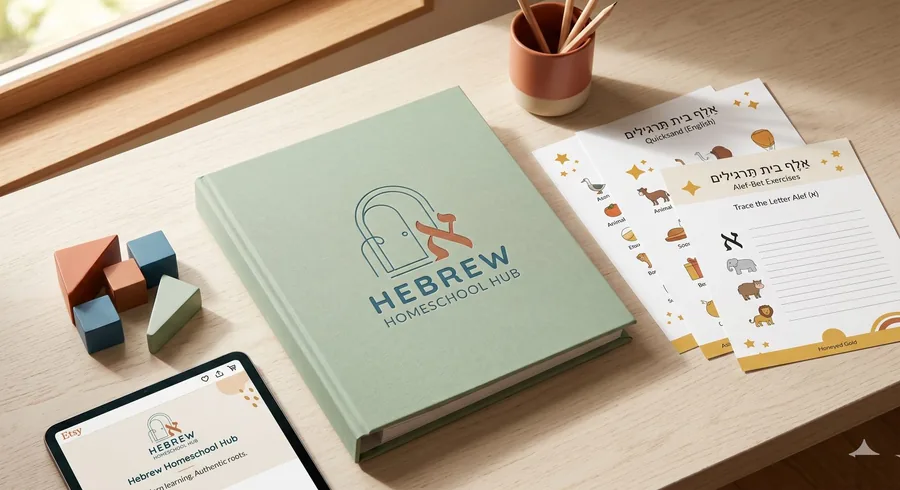
The Hub publishes complete digital Judaic Studies lesson packs for K–6 homeschoolers — every pack covers one Jewish holiday with an English deck, a fully vowelized Hebrew deck, printable worksheets, a teacher prep PDF, and a parent guide with lesson plans. Read more about what we make and why, or jump straight to the lesson packs.