
Chanukah חַג חֲנֻכָּה
The olive oil of the seven species is the same oil from the Chanukah miracle.
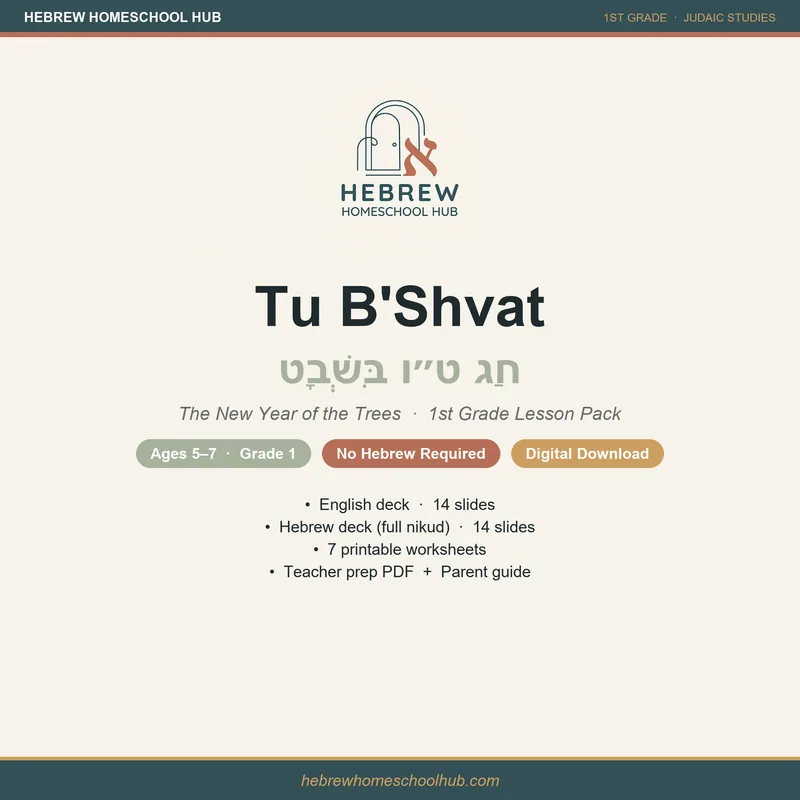
See the Chanukah pack →Trees, fruit, and the Shivat HaMinim — the seven species Israel is praised for. 14 slides of pure celebration, no heavy history. Each fruit gets its own slide. The parent guide even walks you through hosting a Tu B'Shvat seder at home.
New: Free 30-minute lesson plan — teach Tu B'Shvat this week, then grab the pack for the full version.


Download and extract the ZIP folder. Open the printable worksheets, guides and toolkit in a PDF reader. Use PowerPoint or compatible presentation software for the lesson decks and optional worksheet editing. Print holiday worksheets on US Letter paper.
Single-family license: print for your own household. Each family in a co-op needs its own copy. The toolkit paper sizes and worksheet formats are alternate editions, not additional unique pages.
Need help? Website buyers can email hebrewhomeschoolhub@gmail.com with their product and order details. Etsy buyers can contact the shop through their order messages.
Page 6 of the parent guide is a complete kid-friendly Tu B'Shvat seder how-to: what fruits to set out, what brachot to say on each, and how to walk a 5-year-old through tasting all seven species in order — plus the Shehecheyanu blessing for a fruit they haven't had this year.
Slides 6–12 each focus on one fruit Israel is famous for, with its Hebrew name, a beautiful photo, two or three facts kids can actually remember, and a "did you know?" callout. By the end of the lesson, every child in the room knows what wheat, barley, grapes, figs, pomegranates, olives, and dates look like — and what each one means in Jewish life.
No conflict. No hard history. Just trees, fruit, and gratitude to Hashem for a world that grows food. The lesson teaches itself when there's real fruit on the table.
Tu B'Shvat is the rare lesson that gets BETTER when your child is chewing while you teach. We tell you exactly what to set out and when.
The olives slide references the oil of Chanukah; the wheat slide references matzah on Pesach. Your child sees how the holidays connect.
The seven foods the Torah praises the Land of Israel for: wheat (chitah), barley (se'orah), grapes (gefen), figs (te'enah), pomegranates (rimon), olives (zayit), and dates (tamar). Each one gets its own slide in this pack.
Yes — page 6 of the parent guide is a kid-friendly Tu B'Shvat seder how-to: what to set out, what brachot to say, and how to walk your child through tasting each species in order.
Use the pack year-round! The fruits are interesting in every month. The pack is also perfect during Pesach (wheat → matzah), Chanukah (olives → oil), or as a stand-alone unit on Israeli agriculture.
Same holiday — ט״ו בִּשְׁבָט in Hebrew, transliterated different ways. Tu BiShvat, Tu B'Shvat, TuBShevat, 15 Shevat all refer to the same day.
Absolutely. The lesson works fully on its own — every species has a beautiful photo. The worksheets don't require any tasting. You can still do the planting activity.
Yes. When Israel is called "a land flowing with milk and honey" (eretz zavat chalav u'dvash), the "honey" is date honey — a thick syrup made by boiling down dates. If you can find date syrup (silan) in a grocery store, let your child taste it during the lesson.
The olive oil of the seven species is the same oil from the Chanukah miracle.
See the Chanukah pack →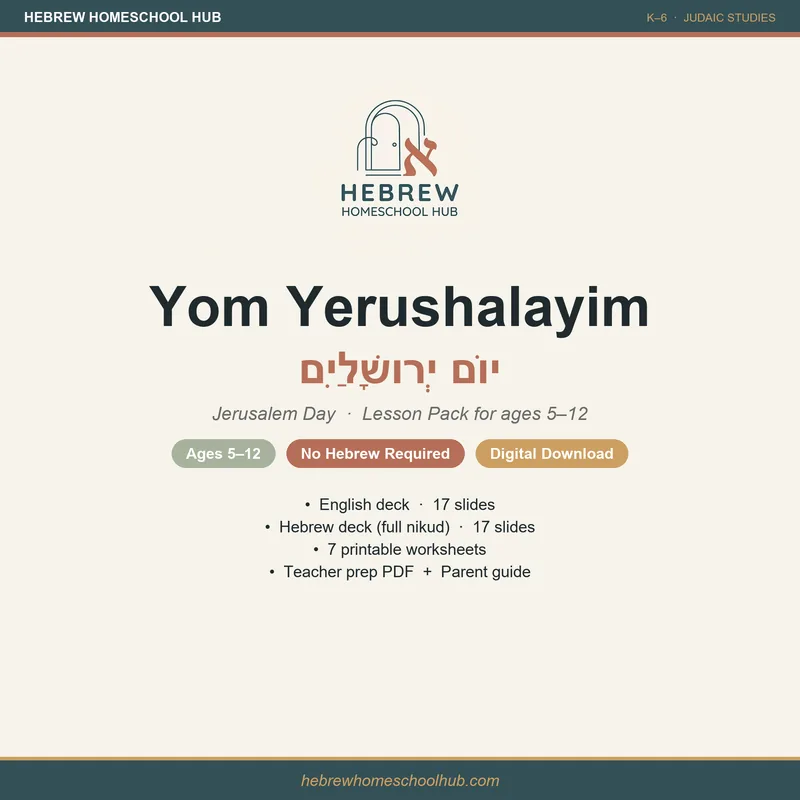
Where the Beit HaMikdash stood — and where the olives still grow today.
See the Yom Yerushalayim pack →Single ZIP download. Yours forever, free updates included. Single-family license. Includes the seder how-to.
Diaspora observance. Every Tu B'Shvat begins at sundown the evening before the first listed date. For halachic questions or Israel-observance dates, see our five-year Jewish calendar or consult your rabbi.
| Year | Begins | Halachic time span |
|---|---|---|
| 2026 | Sunday | Begins Sunday evening, Feb 1; ends Monday night, Feb 2. |
| 2027 | Friday | Begins Friday evening, Jan 22; ends Saturday night, Jan 23. |
| 2028 | Friday | Begins Friday evening, Feb 11; ends Saturday night, Feb 12. |
| 2029 | Tuesday | Begins Tuesday evening, Jan 30; ends Wednesday night, Jan 31. |
| 2030 | Friday | Begins Friday evening, Jan 18; ends Saturday night, Jan 19. |